Nexural — Full-Stack Fintech Platform
A trading platform built like an institution. Run by one person.
A production-grade trading platform with real-time execution, portfolio tracking, a Discord-native AI companion, and Stripe billing.
- Role
- Design + build + operate
- Client
- Sage Ideas (Internal)
- Category
- Fintech
- Status
- Operational

DB Tables
185
API Endpoints
69
Test Suites
61
Billing Incidents
0
Buyer read
What changed here?
If your product has many moving parts, this shows how Sage Ideas makes the operating layer visible before scale breaks it.
Before
A complex fintech product needed trading, data, billing, AI support, and operational controls to work together without a large team.
System
A full-stack trading platform with a relational data core, realtime surfaces, API layer, Discord AI, Stripe, and regression gates.
Result
The evidence is concrete: 185 tables, 69 endpoints, 61 test suites, and zero billing incidents since launch.
185
DB Tables
69
API Endpoints
61
Test Suites
Living architecture
Surface ⇄ System
Nexural is presented as both the product people touch and the operating system underneath it: UI, data model, integration path, evidence, and outcome.
Build something like this- 01Visible productScreenshots and product frames show the user-facing surface without pretending concept art is production proof.
- 02Operating architectureThe case includes a system map so the architecture is visible, not buried in prose.
- 03Evidence registerMetrics, build logs, diagrams, CI artifacts, and links separate actual work from agency theater.
- 04Commercial pathThe page routes qualified buyers toward a matching build, automation, or lab entry.
// scroll to x-ray the build
surface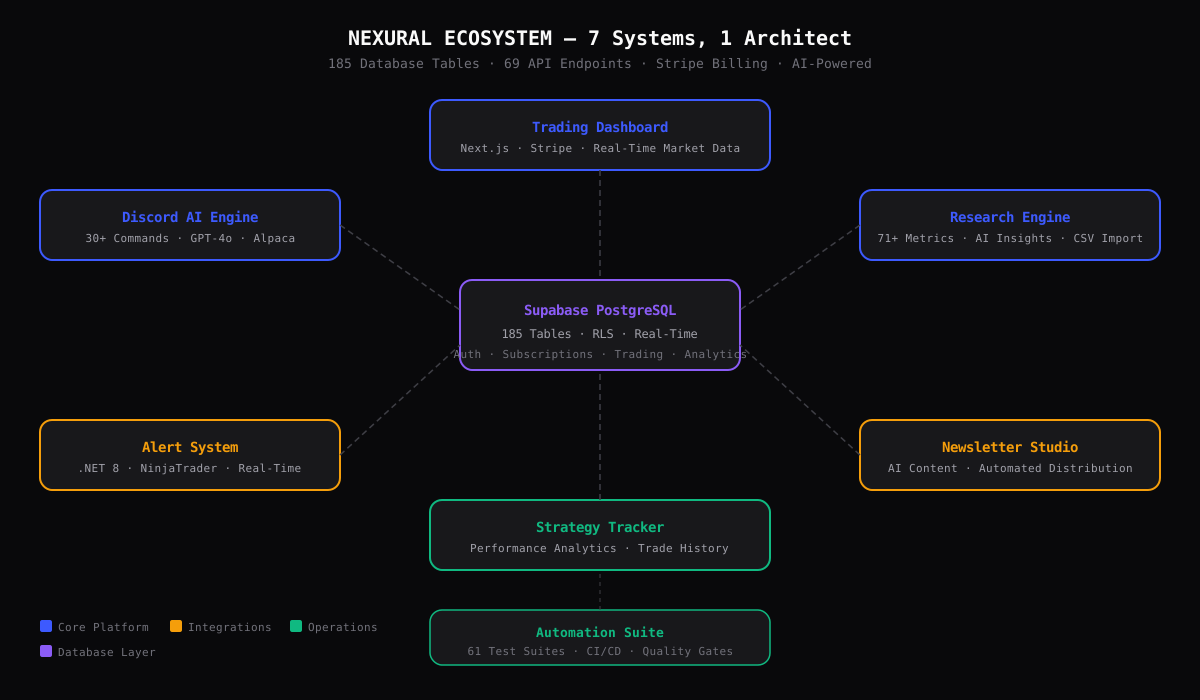 system
case flow
Surface ⇄ System
Nexural operating map
The diagram is intentionally simplified: it shows the buying logic and operating path, not a decorative fantasy architecture.
client
Sage Ideas (Internal)
category
Fintech
evidence
3 assets
Proof board
Receipts before claims.
This page separates shipped surface, system map, real metrics, and available artifacts so the work can be inspected instead of just admired.
proof assets
9
Screens, gallery, artifacts
screens
2
Real product surfaces
artifacts
4
Available during discovery
Primary evidence
185 tables. 69 endpoints. One engineer.
DB Tables
185
DB Tables
185
API Endpoints
69
Test Suites
61
Billing Incidents
0
AI Queries/Week
200+
OSS Templates
3
Surface
Product screenshots and interface frames show the user-facing layer. If real assets are unavailable, the page says so instead of dressing mockups as production proof.
System
Architecture diagrams, build logs, and artifacts make the hidden operating layer visible to technical buyers.
Trading product operating loop
Surface, system, proof, route.
This storyboard turns the case study into a moving operating map: the buyer sees what was built, where the system lives, and which proof points are actually available.
- tables
- 185
- endpoints
- 69
- test suites
- 61
What was broken.
Most trading tools fall into one of two categories: consumer apps so simplified they're useless for serious traders, or enterprise platforms so complex they require an ops team to configure. There was no middle ground for the technically sophisticated individual trader who wanted full control without the overhead.
Nexural was built to fill that gap — a production-grade fintech platform with real-time execution, portfolio tracking, a Discord-native AI companion, and a subscription billing layer that doesn't break on webhook retries.
The challenge: building a system at this scale — 185 relational database tables, 69 API endpoints, real-time market data ingestion, and a Stripe integration that needs to survive every edge case — without a dedicated backend team, a QA department, or a six-month runway for architecture review.
How it was built.
PostgreSQL on Supabase with Row-Level Security for multi-tenant isolation and real-time subscriptions via Supabase channels for live portfolio updates. Backend: FastAPI (Python) — async-first, typed with Pydantic, organized into domain-bounded modules. Frontend: Next.js with server components for data-heavy pages and client components for interactive trading UI.
Real-time via WebSocket connections for live price feeds; Supabase realtime for portfolio state synchronization. Stripe with idempotent webhook handlers, subscription lifecycle management, and metered feature gating. Discord bot backed by OpenAI GPT-4 with tool-calling for portfolio queries, market commentary, and alert management.
The philosophy: don't build features until the foundation is right. The first two weeks were data modeling — no UI, no API, just entity-relationship design, understanding where the RLS policies needed to live, and mapping every Stripe event to a database state.
The system map.
How the pieces talk to each other.
Measured, not asserted.
The real figures from the engagement, printed verbatim. Bars are scaled against the largest comparable magnitude in the set — a secondary cue, never the source of truth.
Selected screens.
Real product surfaces from the engagement — not stock illustrations.
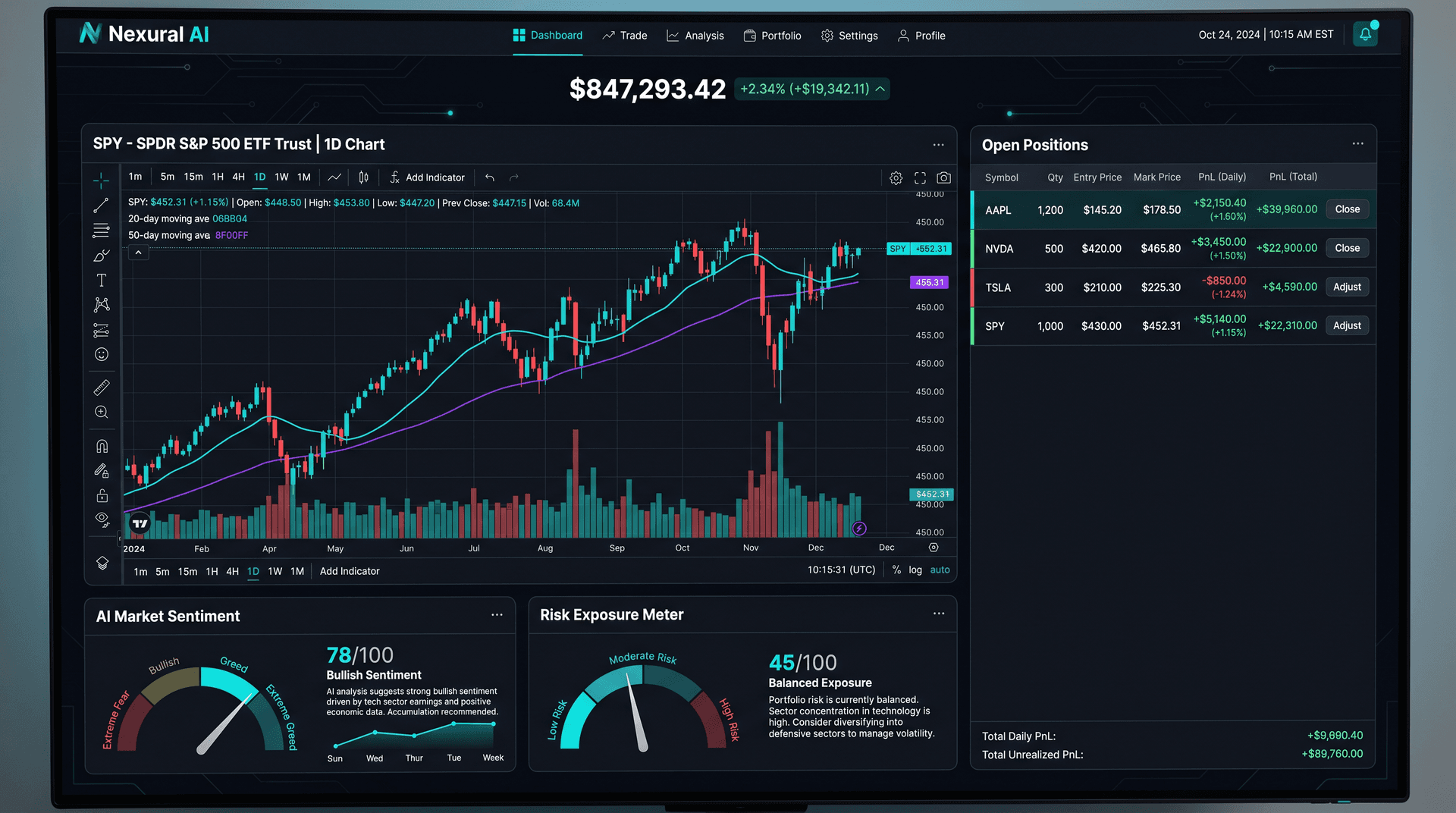
Datasets dashboard — 47 sources, RLS-isolated, real-time ingestion telemetry on every row.
What it actually looks like.
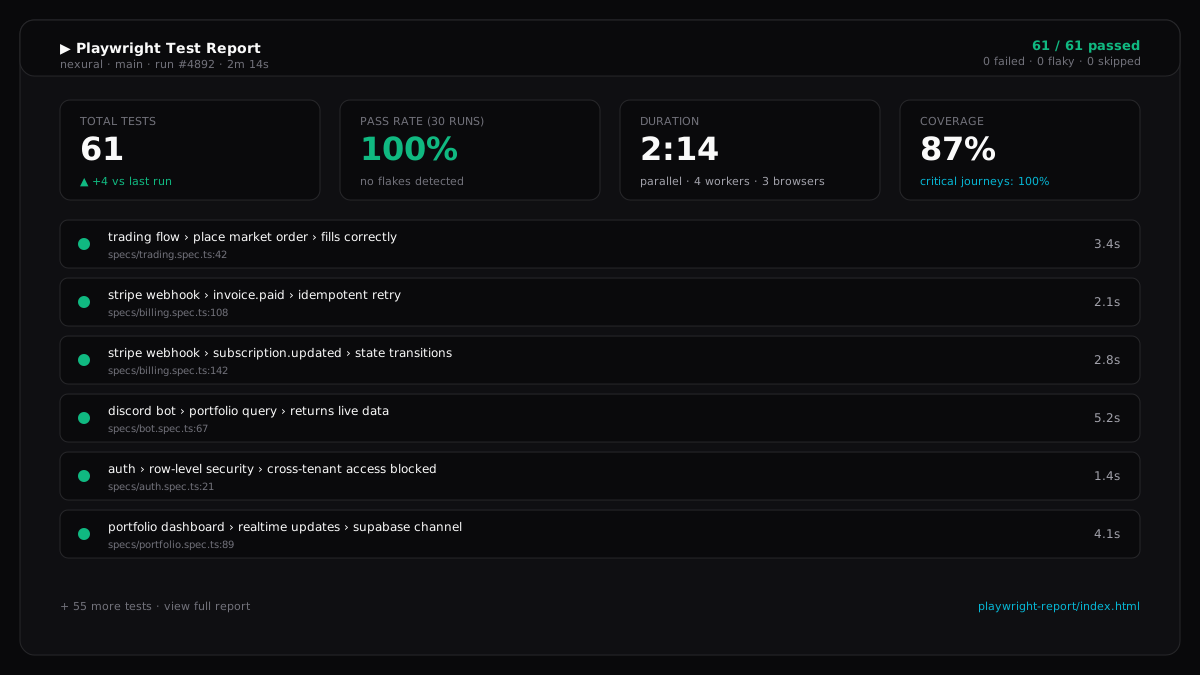
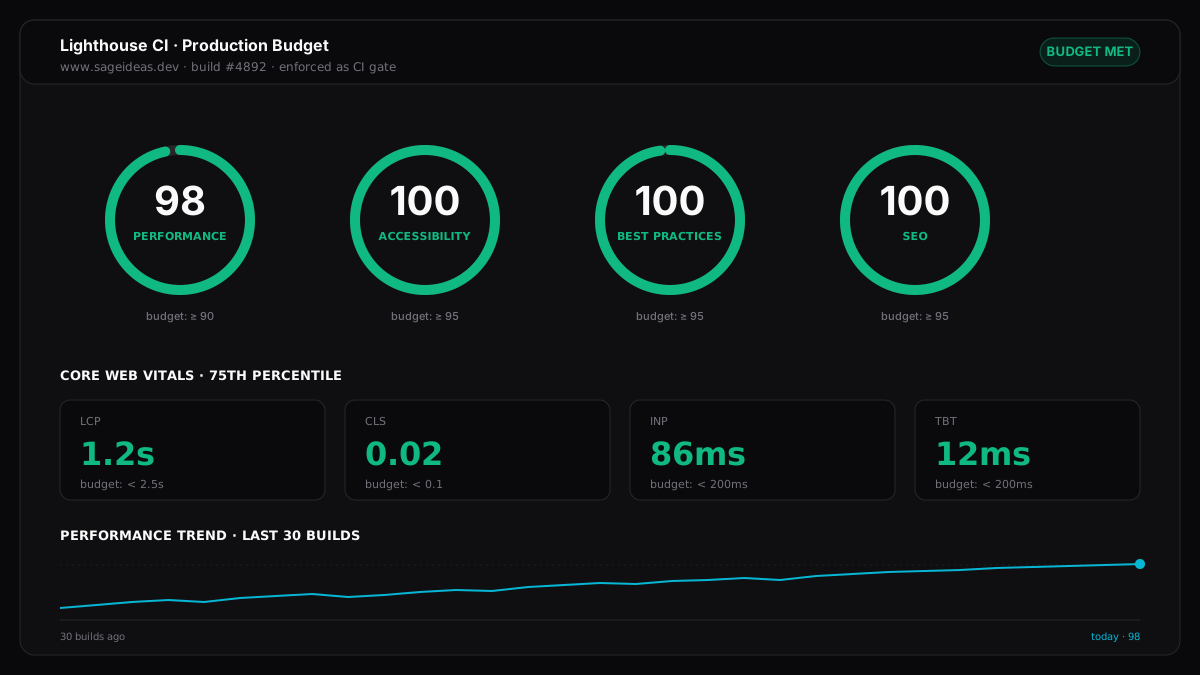
Architecture diagrams, CI runs, and dashboards from the engagement.
What shipped.
The verbatim ship record, given timeline structure.
- log · entry 01
185 PostgreSQL tables with full RLS policy coverage. 69 REST/WebSocket API endpoints (FastAPI). Real-time portfolio dashboard (Next.js + Supabase realtime). Trade execution interface with order management. Discord AI bot: portfolio queries, alerts, natural-language market commentary.
- log · entry 02
Stripe billing: subscription tiers, metered usage, trial periods, webhook idempotency. 61 test suites: unit, integration, E2E, contract, and security tests. CI/CD pipeline with GitHub Actions — no PR merges without passing gates.
- log · entry 03
The Stripe webhook layer is built on idempotency keys and event deduplication — a pattern now templated into micro-saas-starter on GitHub. The Discord bot uses function-calling to query the live portfolio API, meaning it responds to "how is my AAPL position" with real data, not hallucinated commentary.
What it proved.
Platform operational: live, stable, serving active users. Zero billing incidents since launch — the idempotent webhook architecture holds. AI bot handling 200+ natural-language portfolio queries per week.
61 test suites provide regression coverage for all critical paths. Architecture patterns extracted into 3 open-source templates used in subsequent projects.
A single engineer, with the right architecture discipline and AI-assisted development workflow, can build and maintain a system at this complexity level. The 185-table schema isn't a vanity number — it's a data architecture that needed to be right before anything was built on top of it.
Available on request.
- Database schema overview (anonymized)
- Webhook idempotency pattern documentation
- Discord bot architecture diagram
- CI/CD pipeline configuration template
Talk to people on this work.
No fabricated quotes. Reference contacts are shared during discovery, with both parties' consent.
Engineering lead
Worked alongside on production trading systems for 5+ years. Available for technical reference calls — code quality, on-call discipline, incident behavior.
Founder
Engaged Sage Ideas for a Ship + Operate combination. Willing to talk about scope discipline, timeline accuracy, and what handoff actually looked like.